304 vs 316 Stainless Steel PC Enclosures: Which Is Best for Food Manufacturing?
Key Takeaways
Stainless steel is a common feature of food processing environments. Its durable, non-porous properties help manufacturers comply with strict hygiene standards and boost equipment lifespan.
316 stainless steel and 304 stainless steel are very similar in appearance and chemical construction. The biggest differentiator is grade 316’s 2-3% molybdenum, which gives it much greater resistance to corrosive substances than grade 304.
316 stainless steel won’t degrade under repeated contact with acids, chlorides and chemicals. Its additional molybdenum content reinforces its passive chromium layer, ensuring that enclosures made from this material retain a smooth, crevice-free surface that doesn’t become a breeding ground for health-endangering bacteria.
Investing in an IP65 316 stainless steel enclosure offers a lower total cost of ownership (TCO) because of its superior strength and resistance to food processing hazards.
316 stainless steel PC enclosures help plant managers to maintain crucial food hygiene standards.
Food processing facilities must adhere to strict regulations around safety, hygiene and contamination control in order to remain operational and compliant. Failure to follow these rules can have a devastating impact on businesses and consumers, with compromised batches causing production delays, product recalls, and in the most severe cases, foodborne illnesses that endanger public health.
One of the best ways of managing these risks is for plants to invest in tools and machinery that are specifically designed to be food safe. Stainless steel is the world’s most popular material for use in this regard, due to its smooth, inert and non-porous properties, which make it easy to sanitise and difficult for bacteria to penetrate.
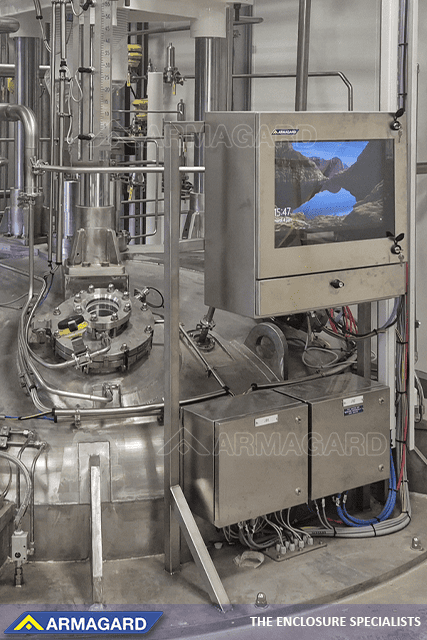
In food production, stainless steel, notably grades 304 and 316, is used in the fabrication of everything from conveyors and fermentation vats to pasteurisers and pickling tanks, as well as the computer cabinets that protect the hardware that keeps manufacturing lines running smoothly. Armagard IP65 316 stainless steel PC enclosures, for instance, allow plant managers to safely deploy IT equipment in these types of hazardous environments, ensuring both hardware longevity and decreased risk of food contamination.
Read on to discover the key differences between 304 and 316 stainless steel, and why we use the latter in the production of our IP65 PC enclosures.
What’s the Difference Between 316 and 304 Stainless Steel?
Both grade 316 and 304 stainless steel belong to the austenitic class of stainless steels. They look near-identical and have similar levels of nickel and chromium, which gives them exceptional toughness, durability and resistance to environmental hazards.
Grade 304 is the world’s most widely used form of stainless steel and is found in standard household appliances, commercial kitchen equipment and interior design applications. Grade 316, on the other hand, is typically reserved for more heavy-duty applications that require proven protection from harsh substances.
The reason for this is 316 stainless steel’s 2-3% molybdenum content, which allows it to offer enhanced resistance to acid, chloride and chemical corrosion by reinforcing the strength of its self-healing passive chromium layer. This makes grade 316 much more suitable for use in acidic, high-salinity food manufacturing facilities as well as marine and coastal environments and pharmaceutical production plants.
As it offers superior damage resistance to grade 304, products made from 316 stainless steel are typically more expensive. However, in many cases, the larger upfront cost is offset by its long-term value: because 316 stainless steel can endure harsher conditions, it tends to last much longer than lower-grade alternatives.
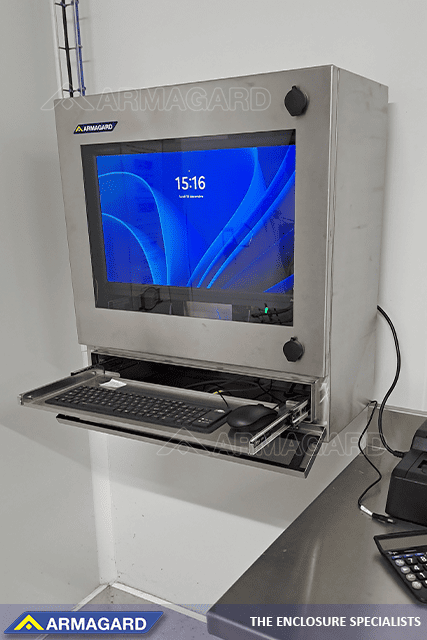
Waterproof industrial computer enclosures made from food-grade stainless steel ensure equipment longevity.
Why Use IP65 316 Stainless Steel PC Enclosures in Food Manufacturing?
Molybdenum’s presence in 316 stainless steel means that computer enclosures made from this material can perform effectively in food production plants, providing protective PC housing that won’t degrade upon contact with corrosive agents or cause disastrous contamination issues.
This gives manufacturers the confidence their equipment will continue to perform as expected in all conditions without impacting the safety of the production line.
Corrosion Resistance
The salts, brines and washdown chemicals found in food processing environments can wear down 304 stainless steel’s passive chromium layer, triggering breakdown and decay.
The addition of molybdenum to 316 stainless steel transforms this thin self-healing film into a resilient barrier that is much more difficult for corrosive elements to attack. Its presence speeds up the time it takes for the passive layer to heal after exposure to aggressive contaminants, which stops rust and crevices from forming on equipment surfaces.
This valuable trait means that 316 stainless steel computer enclosures have a superior lifespan to protective units made from lower grades, giving them the ability to safeguard enclosed hardware and ensure manufacturing efficiency for a longer period of time.
Hygiene Assured
Over time, acids, chlorides and chemicals can combine to create microscopic holes (pits) within equipment made from 304 stainless steel and other less well protected metals. These crevices quickly become traps for organic food debris, which can often be impossible for sanitisers and cleaning tools to penetrate.
Hidden foodstuffs allow bacteria such as listeria, salmonella and E. coli to breed and multiply, forming a protective biofilm that is highly resistant to disinfectants. Deploying 316 stainless steel enclosures that resists attack from acids, chemicals and chlorides minimises these bacterial risks, reducing the possibility of emergency line stoppages, decontamination procedures and product recalls that can cost manufacturers money and compromise public health.
Improved Equipment Visibility and Performance
The chemical composition of 316 stainless steel helps PC enclosures made from this material to act as a solid barrier against harmful contaminants. When combined with other key features, this ensures that equipment enclosed within these cabinets performs reliably in all conditions and can be easily accessed by frontline workers.
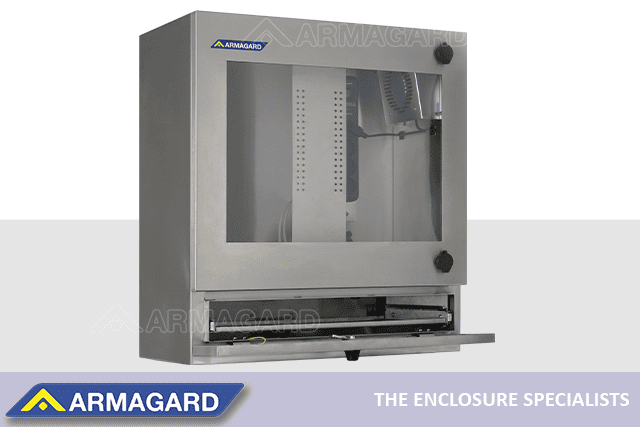
An axial fan recirculates air around the enclosure to prevent the build-up of heat and maximise hardware longevity, with the option to add a 150w anti-condensation heater to protect computer performance in cool conditions. A polycarbonate window provides a clear view of enclosed monitors, making it easy for operators to access essential information and complete data input tasks without opening the enclosure.
Water-repellent gasket seals create a durable elastomeric barrier that protects the units from the ingress of moisture and dirt, preventing equipment from experiencing irreparable damage that can force production lines to a standstill.
What Types of Corrosion Resistant Computer Enclosures are Available?
Armagard 316 stainless steel enclosures can protect a range of essential shop floor computer equipment, providing coverage for computers, displays and printers in various sizes:
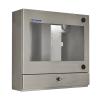
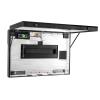
The SENC-400 waterproof industrial computer enclosure protects thin-client PCs and monitors up to 22".
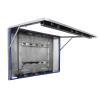
Waterproof Industrial Computer Enclosure: The waterproof industrial computer enclosure uses food-grade 316 stainless steel to protect an enclosed PC and widescreen monitor up to 22". Rated to IP65, it safeguards equipment in temperatures from -5°C to +40°C and can be wall or stand mounted for reliable visibility.
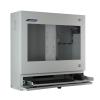
Waterproof Industrial Computer Workstation: Compatible with VESA monitors up to 24", the IP65 waterproof industrial computer workstation protects PCs and screens in washdown settings. It features space for a keyboard shelf, sliding keyboard tray or integrated membrane IP65 keyboard, allowing frontline workers to carry out everyday data entry tasks with ease.
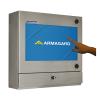
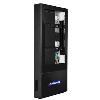
Food Manufacturing Digital Signage Cabinet: The food manufacturing digital signage cabinet enables plant managers to improve communication across the factory floor. They can be used to display crucial performance metrics and important updates, giving operators consistent visibility of production line efficiency.
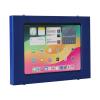
Stainless Steel IP69K Monitor: Rated to IP69K for high-pressure, high-temperature washdowns, the stainless steel IP69K monitor guarantees exception display durability in the most challenging environments.
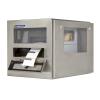
Waterproof Printer Enclosure: This stainless steel label printer enclosure enables factory operatives to print and retrieve labels without leaving the shop floor. It is highly resistant to corrosion and staining, and can be mounted on a stand/trolley, floor standing enclosure or suitable stable surface.
Why Choose Armagard for Stainless Steel Computer Enclosures?
Since 1991, Armagard has specialised in the design and manufacture of protective enclosures for PCs, displays, printers and more. Our IP65 rated stainless steel cabinets are used by many leading food manufacturers such as Mars, Kellogg’s and Rossdown Farms, keeping plant equipment performing reliably in more than 50 countries.
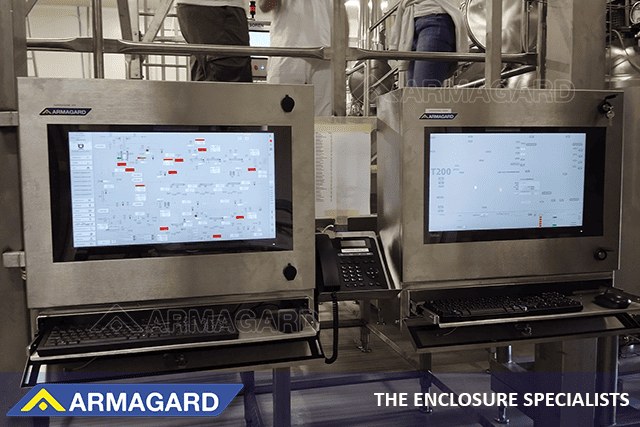
316 stainless steel PC enclosure systems can be installed side by side.
When you partner with us, you will benefit from over 30 years of industry experience as well as a market-leading five-year warranty and lifetime technical support from friendly, helpful and informed staff who will work alongside you to find the best solution for your needs.
Looking to invest in a 316 stainless steel enclosure for your food production facility? Get in touch with a member of our team today.
Frequently Asked Questions (FAQs)
Fill out our contact form or call us on +44 (0)121 608 7226. A specialist member of our team will be able to advise on the best solution for your requirements.
Our IP65 316 stainless steel cabinets are designed for use in washdown environments where hygiene is a key concern. Their sturdy chemical composition and waterproof sealing allows them to withstand frequent exposure to acids, chlorides and sanitation protocols without becoming damaged. This ensures both enclosure and equipment longevity.
Our IP65 waterproof PC enclosures provide protection for VESA-ready monitors from 17" to 27". Depending on model, they can also house a range of desktop, tower and small form factor PCs. For more information on device compatibility, contact an account manager.
This depends on the IP rating. Our IP65 waterproof PC enclosures are designed for standard waterjet washdowns, whereas our IP69K display cabinets are specifically engineered to withstand high-pressure, high-temperature chemical sanitation processes.
An integrated recirculating axial fan and optional 150w heater keep enclosed equipment at a stable operating temperature, ensuring reliable hardware performance in food processing environments from -5°C to +40°C.
We offer numerous mounting options depending on your chosen model, with wall, stand and worktop installation available. Speak to a member of our team to discuss your options.
Our lead times vary based on specification and demand. Get in touch to discover our latest delivery estimate prior to placing your order.
Yes. We offer routine international shipping across the UK and mainland Europe with Delivery Duty Paid (DDP). Orders for North America are shipped from Chicago via UPS or FedEx on a DDP basis, inclusive of duties and import charges. We may also be able to deliver to other destinations on enquiry.