How to Protect Your TV in Homes with Autism and Challenging Behaviours
Key Takeaways
Securely wall mounting the TV, concealing cables and removing nearby objects that could be thrown are practical first steps for reducing the risk of TV damage.
Acrylic TV screen protectors can help with scratches and minor impacts, but a fully enclosed TV cabinet offers greater protection against repeated impacts, tampering and access to the television.
Steel TV protection cabinets are better suited to high-impact environments because they provide greater structural strength and durability than lighter plastic alternatives.
Where TVs are repeatedly damaged, a purpose-built protection cabinet can be more cost-effective over time than replacing broken televisions.
The anti-ligature TV cabinet restricts access to rear cables and makes it harder to gain leverage and pull the cabinet away from the wall.
To protect your TV in homes with autism, it is important to use a combination of preventative measures and specialist protection solutions. Securing your TV properly, creating a safer environment, and using TV protectors or protective enclosures can help reduce the risk of accidental damage while allowing the television to remain a valuable part of everyday life.
For many autistic households, TVs provide more than entertainment. They can support emotional regulation, learning, routines, and low-pressure social interaction. However, during moments of sensory overload, distress, or energetic play, accidental impacts can sometimes result in damage to the screen. While this is not the experience of every SEN household, it is a concern raised by many parents and caregivers.
This article explores practical ways to protect your TV, from simple preventative steps to advanced TV protection solutions from Armagard.
How Do TVs Incur Damage in Homes with Autism?
In some households where autistic individuals experience sensory overload, distress, or differences in coordination and impulse control, accidental TV damage can occur. Damage is typically caused by:
Thrown objects
Physical impacts
Tactile stimming involving contact with the screen or television unit
TVs being pulled from walls or furniture
Tampering with exposed cables
Understanding the Serious Risks
A damaged or unsecured TV can create several safety concerns. If a television is pulled from its mounting or furniture, it could fall and potentially cause injury. Damaged screens may also create sharp edges or fragments that could cause cuts, while exposed electrical components may present additional risks if the television remains connected to power.
LCD displays contain liquid crystal material and other internal components that should be handled carefully if the screen should become damaged. For households where accidental impacts are a recurring concern, choosing an appropriate protection solution can help improve safety and reduce the likelihood of damage.
Ways to Keep Your Family Safe
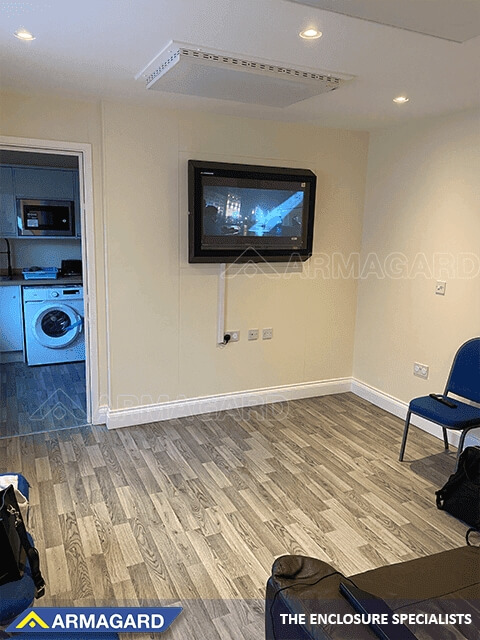
As a first step, consider whereabouts your TV is positioned within your home. Creating as much space as possible around the television can help reduce accidental impacts. You may need to reposition or wall mount the TV, ensuring it is securely fixed and suitable for the environment.
Any cables should be concealed where possible to reduce tampering risks, while nearby objects that could be thrown should be removed from the surrounding area. Furniture near the television should also be properly anchored to improve overall safety.
When Simple Solutions Aren't Enough to Protect Your TV in Homes with Autism
Depending on the level of risk within your home, these preventative measures may not be enough. If you are experiencing repeated broken TVs, recurring screen impacts, concerns about damaged glass, or simply need the television to remain available every day, a purpose-built TV protection solution may provide a more reliable long-term option.
Help extend display life with the autism TV protection cabinet.
Do TV Protectors Work?
When choosing a TV screen protector, it is important to understand that different solutions are designed for different levels of protection. The right choice for you, depends on the type of risk present in your environment.
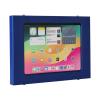
For everyday protection against scratches, fingerprints, and minor accidental impacts, an acrylic TV shield can be an effective solution. These products focus on protecting the front surface of the display while maintaining picture quality, making them suitable for reducing wear and tear during normal household use.
However, clear plastic display protectors have limitations. They only cover the front of the screen and cannot protect the TV body, mounting system, cables, or prevent the TV from being pulled over. They also provide limited protection against more significant impacts, moisture, dust, or outdoor conditions, and are typically secured with Velcro.
Full TV Protection Cabinets
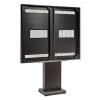
For environments where repeated impacts, access to the television, or more serious damage risks are a concern, a fully enclosed TV protection cabinet offers a higher level of safeguarding. Rather than protecting only the screen surface, these cabinets enclose the entire TV and provide protection against impact and tampering.
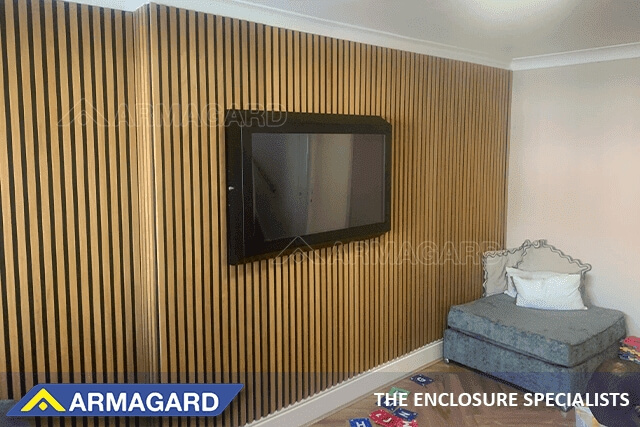
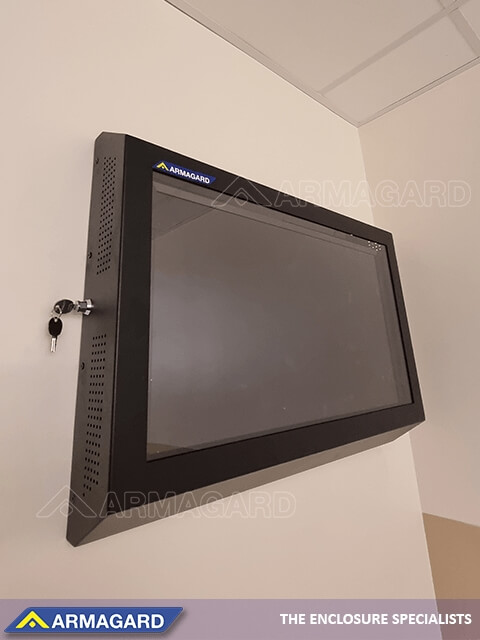
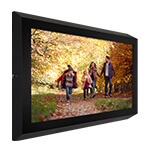
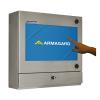
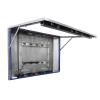
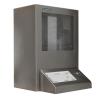
Armagard's range of digital signage solutions includes specialist enclosures designed for demanding environments. The steel-manufactured autism TV protection cabinet has been developed specifically to help protect televisions in SEN environments and homes where additional safeguarding is required.
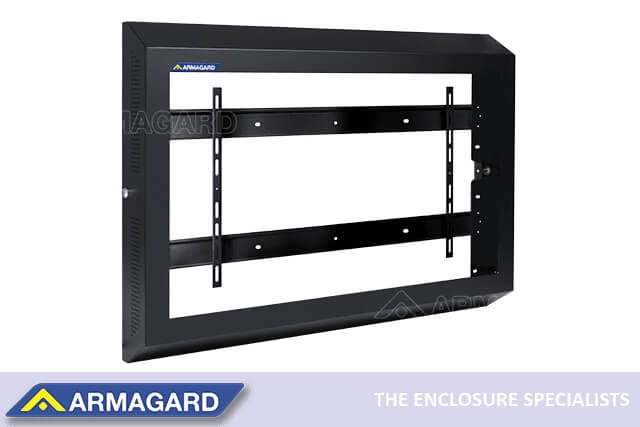
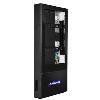
It incorporates a slanted top and bottom design to help deter the attachment of ropes or other materials to the unit. Its durable frame and protective viewing window help shield the display from impacts and thrown objects while allowing continued access to the screen.
Plastic vs Metal TV Protection Enclosures
To protect your TV in homes with autism effectively, it is also important to consider the material and construction of the enclosure. Both plastic and metal TV enclosures can provide protection, but their performance differs significantly in high-impact environments.
Plastic enclosures are generally lighter and may crack or split under sufficient force, particularly around joints, hinges, or fixing points. This can potentially create additional risks through exposed edges or weakened components.
On the other hand, steel enclosures offer greater structural strength and durability. Steel can absorb repeated impacts, making it better suited to environments where a TV may experience frequent contact or force.
It is also worth considering how different enclosure designs compare. Multi-part enclosures rely on several panels and mechanical fixings, which may weaken over time. A single-piece outer frame reduces the number of joints and potential weak points, creating a more robust solution for long-term use in demanding environments.
The anti-ligature TV cabinet is available in sizes from 24 to 86 inches for commercially available VESA-compatible displays.
6 Things to Consider When Choosing the Right TV Protection Cabinet
When choosing the right enclosure, consider the following:
TV compatibility
Check your TV's dimensions and VESA mounting pattern to ensure the enclosure is correctly sized and compatible with your TV’s VESA layout.
Secure installation
A secure wall mount or fixing system is essential, particularly in environments where the enclosure may experience repeated contact.
Ventilation
Effective ventilation allows heat to dissipate naturally while helping prevent dust, moisture, or foreign objects from entering the cabinet. It also allows sound to pass through, so speakers remain clear.
Lockable access
Lockable access allows authorised users to maintain the TV or connect devices while reducing unwanted access.
Material strength
A steel chassis provides greater rigidity and strength than lighter alternatives, while a shatter-resistant polycarbonate viewing window provides impact resistance without affecting picture quality.
Overall design
A single-piece outer frame with minimal joins helps reduce weak points, while features such as removable access panels and effective cable management make installation, cleaning, and maintenance easier throughout the product's lifespan.
The autism TV protection cabinet has a sloped top and bottom to help prevent rope or other materials from being secured around the enclosure.
Cost vs Replacing Multiple TVs
Although a TV protection enclosure requires an initial investment, it can be more cost-effective over time than repeatedly replacing damaged televisions. In households where accidental impacts lead to cracked screens or broken displays, replacement costs can quickly add up. Additional expenses may include delivery, installation, recycling damaged units, and disruption caused when the television is unavailable.
A high-quality steel enclosure can help extend the lifespan of your television, reduce replacement costs, and provide greater peace of mind over the long term.
Conclusion
In order to protect your TV in homes with autism and challenging behaviours, you must choose the right level of protection for your particular environment. Simple steps such as secure mounting, careful positioning, cable management, and removing nearby hazards can reduce everyday risks. However, where repeated damage or safety concerns remain, a purpose-built TV protection cabinet can provide a stronger and more reliable long-term solution.
Armagard's specialist TV protection solutions are designed to help safeguard TVs in demanding environments, including SEN homes where additional protection is sometimes required.
If you need advice on selecting the right cabinet for your TV size, installation requirements, and level of protection needed, Armagard can help you find the most suitable solution for your home.
Frequently Asked Questions (FAQs)
The cost depends on your TV size. Contact us and an Account Manager will provide a quote for a recommended model.
Yes. Portrait and landscape cabinets are available for selected screen sizes. Contact us for details.
The TV cabinet is available for a wide range of TV sizes. Landscape models: 24", 32", 43", 50", 55", 65", 75" and 86". Portrait models: 24", 32", 55" and 65". We also manufacture weatherproof outdoor LCD enclosures.
Yes. The high-impact polycarbonate window provides a clear view, while the powder-coated steel enclosure offers durable protection.
No. Two key-operated locks and flush-fit screws restrict access, while the flush wall mount helps prevent tampering.
Yes, if the wall can support the combined weight of the enclosure and TV. Wall fixings are not supplied, so use fixings suitable for your wall type.
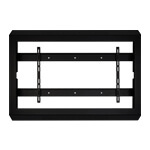
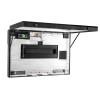
The two-part design simplifies installation: the wall frame is fixed first, followed by the TV mount and outer enclosure.
Manufactured to order, lead times vary by demand and specification. Contact us for the latest delivery estimate. Limited stock may be available for selected models.
We supply both. Whether you need a single enclosure for a home environment or a larger order for a school, hospital, care home or other institution, we can help.
Yes. All enclosures are UK-manufactured and shipped worldwide. Mainland Europe and North America orders are supplied Delivered Duty Paid (DDP), including duties and import charges.
Black is our standard finish. Custom colours are available subject to order quantity and production requirements. For more information, please contact us.